Tanga Market Kokura: Food Walk, Best Stalls, Post-Fire Update (2026)
Tanga Market is Kokura's kitchen — fish counters, snack stalls, the famous katsuo-no-tataki torch-sear, and the post-2022-fire rebuild. What to eat, when to go, and which stalls a Moji-ku local actually visits.

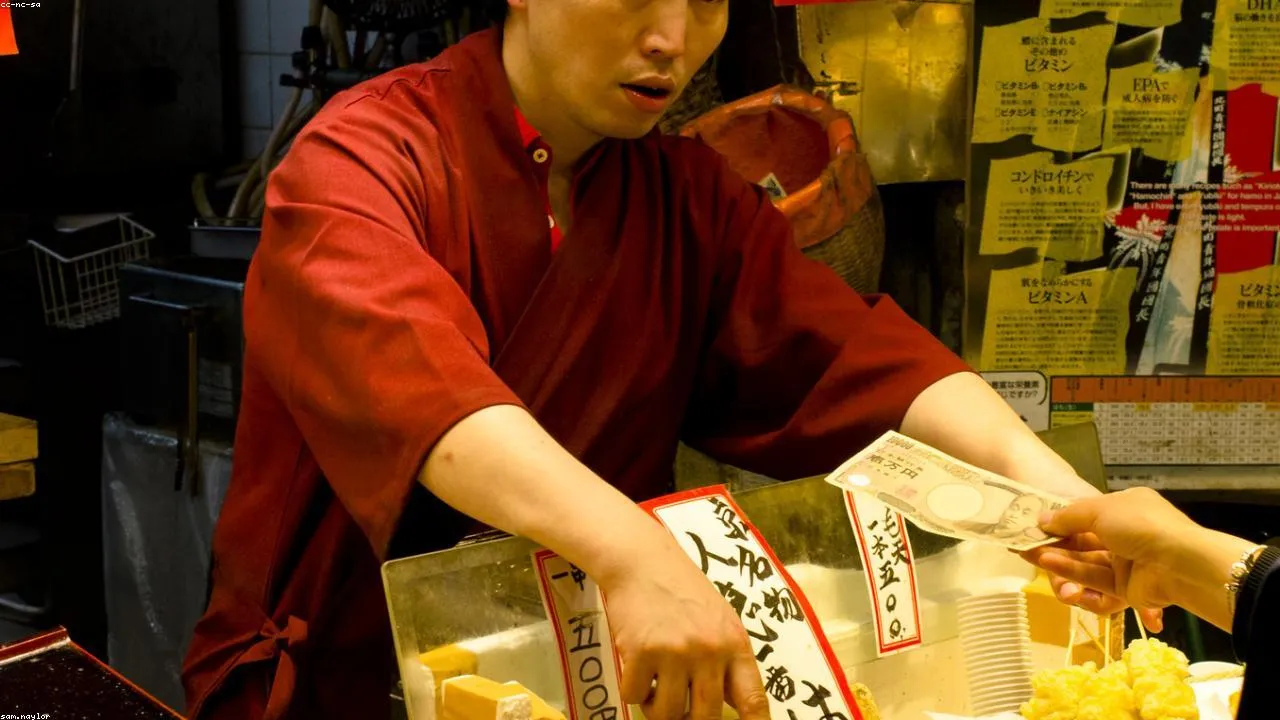
I do a Tanga walk every two or three weeks for fish, even though I live in Moji-ku. That’s a 30-minute round trip on the train just to buy fish I could theoretically buy closer to home. I keep going because Tanga is not really about the fish — it’s about the accumulated fact of a place that has been feeding this city for over a century, and the particular texture of a morning market where half the vendors remember your face and the other half are too busy to notice you exist. Both are exactly right.
This is the practical guide for your first visit. And probably your second.
What Tanga Market is
Tanga Market (旦過市場) is a covered market arcade in central Kokura, in the Uomachi district of Kokurakita-ku, roughly 10 minutes’ walk north of Kokura Station. The market has existed in some form since the early 20th century and the current covered arcade dates to postwar reconstruction.
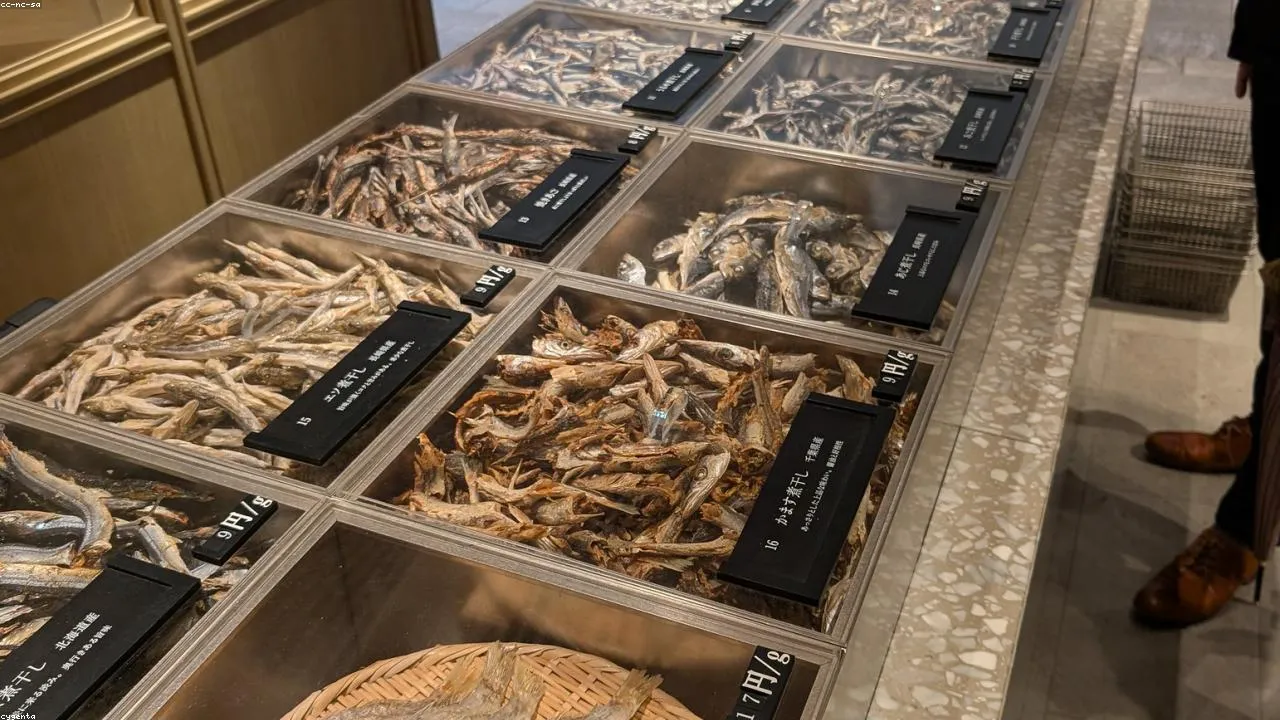
The layout is a roughly 200-meter covered arcade with approximately 80 stalls — about 60% operational as of May 2026, with the remainder in the final phase of post-fire reconstruction (more on that below). The stall mix: fresh fish (about 30% of the market), vegetables and pickles, prepared foods and bento, meat, sweets and mochi, sake and shochu, household goods, and a handful of standing food-and-drink counters.
The market is at its best mornings from 7:00 to noon. This is when the fish is fresh, the sear stands have their charcoal going, and the vendors are in full performance mode. Afternoons are slower — still worth visiting, but the energy is different. Late weekday mornings (9:00–11:00) are my preferred time: busy enough to feel alive, not so crowded you can’t move.
Closed: Wednesdays and January 1–3.
The 2022 fire and rebuild — honest update
In April 2022, a fire started in the market’s central section and destroyed a significant portion of the arcade. For most of 2022–2023, many longtime vendors operated from temporary facilities while the rebuild was planned and executed.
Current status (May 2026):
- Phase 1 reconstruction (the main arcade structure) was completed in late 2023. The majority of stalls are back in their original or nearby locations under rebuilt roofing.
- Some structural sections at the eastern end of the arcade are still in the later stages of build-out. You may encounter construction fencing around a minority of the original stall slots.
- Most of the iconic vendors — including the katsuo-no-tataki sear stall, the pickle counter, and the standing sushi counter — returned to the market in 2023 or early 2024.
- Several stalls did not reopen after the fire. Gaps in the arcade are occupied by newer vendors, some of whom are doing interesting things. The rebuild has brought a small number of younger vendors into the market — coffee, craft beer — alongside the traditional fish and pickle stalls.
Net result: Tanga is operating, worth visiting, and still Tanga. The fire changed it, as these things do. But the character is intact.
How to walk the market — recommended route
Tanga is a walking market. The convention is to buy a bite, stand and eat it, move on. There are no tables. Don’t try to sit down at a stall counter unless the stall is explicitly set up as an eat-in counter (a few are).
Enter from the Uomachi side (the west entrance, coming from Heiwa-dori). This puts you at the fish stalls immediately, which is the right order. Walk slowly, accept any proffered sample, buy the things that look good. The arcade bends slightly; follow it through to the eastern end, then come back through the middle.
The whole route at a browsing pace takes about 40 minutes. Faster if you know what you’re after; much longer if you stop to talk.
What to eat — eight stall recommendations
1. Katsuo-no-tataki stand The standout Tanga experience. A vendor sears whole bonito loins with a handheld torch right in front of you — the smell alone draws you over. Sliced into tataki and served with garlic, ginger, and green onion on a small plate or tucked into a folded piece of paper, ¥400–600 depending on the size. This is the dish most associated with Tanga. Get it.
2. Standing sushi counter One good sushi counter operates mid-arcade. Not high-end — this is market sushi, priced appropriately, with whatever the fish stalls have surplus of that morning. Two or three pieces at a time, standing up, with the vendor explaining what you’re eating if you ask. ¥150–300 per piece.
3. Pickle counter (ぬか漬け) Kokura’s local nukadoko (fermented rice-bran) pickles are a specific thing. The Tanga pickle stalls have been operating for generations and the nukadoko pots are decades old. Cucumber, daikon, eggplant — buy small amounts to eat as you walk. Also a good souvenir if you’re staying somewhere with refrigeration.
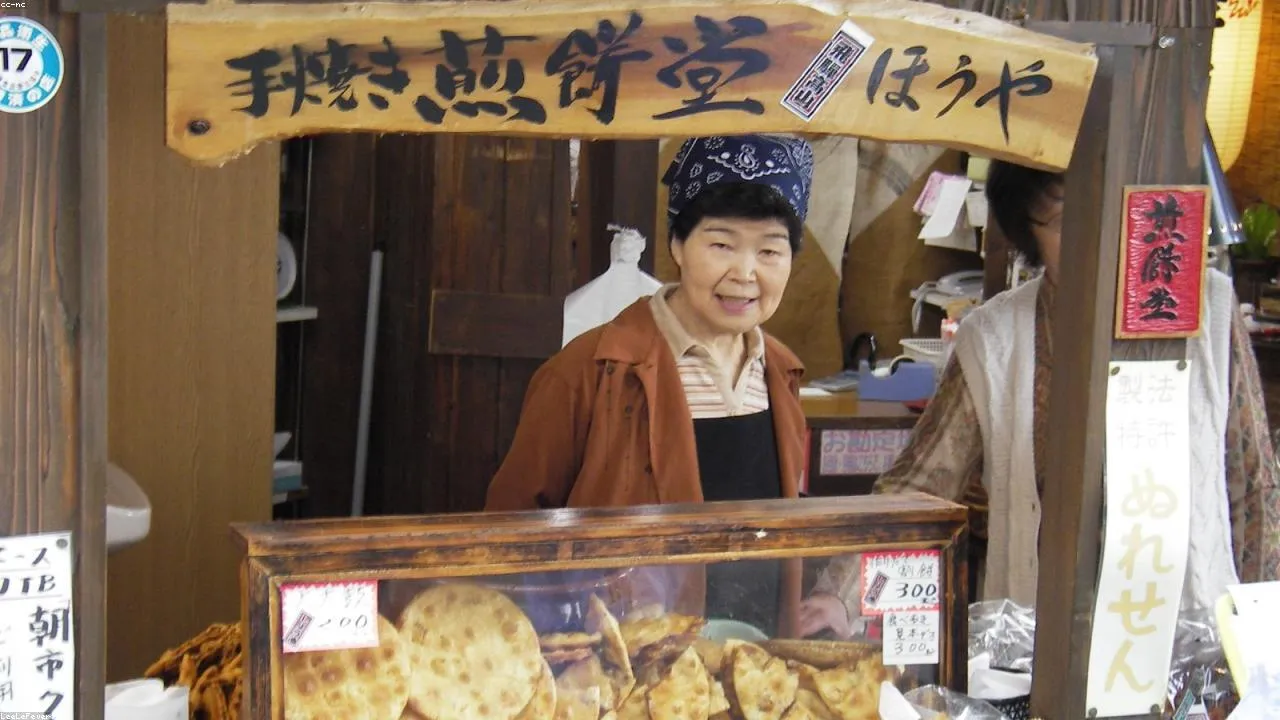
4. Senbei (rice cracker) stall The Kokura-style senbei here are soy-dark and slightly soft at the center, different from the light crackers sold in Tokyo department stores. Sold in small bags or individually. Worth a bag for the walk.
5. Yakitori counter Best in the late afternoon (from around 15:00) when the charcoal is up and the after-work crowd starts filtering in. Get the tsukune (chicken meatball) if it’s available.
6. Mochi corner Seasonal mochi from one of the older wagashi stalls near the west entrance. The daifuku mochi here is unremarkable in a deeply satisfying way — just fresh, properly sweet, and made by someone who has been making mochi in this market for forty years.
7. Local sake and shochu A small liquor specialist mid-arcade stocks Fukuoka and Kyushu regional sake and shochu that you won’t find in airport duty-free. Also offers small tastings. Good place to buy something to take home.
8. Bento stall If you want to sit down later, the prepared bento stalls near the east entrance put together rice boxes with the morning’s fish and proteins. ¥600–900. Take one to Kokura Castle’s grounds or to the Murasaki River bank.
The vibe — what to know before you go
Tanga is a market for residents, not tourists, and it operates accordingly. The vendors are largely in their 60s, 70s, and 80s — second and third generation, in many cases families who have been in the market since the postwar rebuild. They’re not unfriendly, but they’re not performatively welcoming either. This is their workplace.
Language: English signage is minimal. Japanese only at most stalls. The universal language is pointing at something and holding up fingers for quantity. Smartphone translation (Google Translate camera mode, Naver Papago) works fine and most vendors have seen tourists use it. A few of the newer post-fire stalls have bilingual menus.
Cash: Bring ¥2,000–3,000 in cash. Older stalls are cash only; newer ones may take PayPay or cards. Don’t assume.
Photography: Photographing the stalls and the arcade itself is generally fine. Ask before photographing individual vendors directly — gesture your phone at them with a questioning look. Most will say yes; some prefer not. Respect the ones who don’t.
What’s around Tanga
Tanga sits in the walkable core of central Kokura. After your market walk:
- Kokura Castle — 10 minutes south on foot; see our castle guide for the full picture. The castle grounds make an excellent place to eat your bento.
- Heiwa-dori arcade — 5 minutes west; a covered shopping street with clothing, pharmacy, and a few good ramen shops.
- Riverwalk Kitakyushu — 7 minutes south; the large shopping complex on the Murasaki River is the nearest public toilet.
A full day in Kokura starting with an early Tanga market walk, then the castle, then Riverwalk and the river in the afternoon, is one of the most reliable good days in Kitakyushu.
See also where to eat in Kokura for restaurants beyond the market, and Kokura food by category for the broader Kitakyushu food scene.
As part of a tour
If you’d prefer a guided food walk with context — history of individual stalls, help navigating the language barrier, and a local’s knowledge of which counter is worth stopping at — the Fukuoka Foodie Culture Tour (browse on our tours page) includes Tanga Market as a featured stop. The guide’s relationships with the vendors add a dimension that’s hard to replicate on your own. See the full Fukuoka Foodie Culture Tour guide for what’s included.
Book the Fukuoka Foodie + Culture day tour on Klook (ID 170647)Practical information
| Detail | Information |
|---|---|
| Hours | ~7:00–18:00 (varies by stall; busiest 7:00–12:00) |
| Closed | Wednesdays and January 1–3 |
| Admission | Free to enter |
| Budget | ¥1,500–3,000 for a full snack walk |
| Payment | Mostly cash; some newer stalls take cards/QR |
| Nearest toilet | Riverwalk Kitakyushu (5 min) or Kokura Station (10 min) |
| WiFi | Patchy; use a Japan eSIM |
| Access | 10 min walk from Kokura Station |
Neighborhood context
Tanga is in the Uomachi neighborhood — literally “fish town” — which tells you what the area has been for centuries. The Murasaki River runs a few blocks south. The district around the market is one of Kokura’s most characterfully lived-in neighborhoods: small restaurants, local bars, a few neighborhood izakaya that have been open since before most visitors were born. Wandering the streets immediately around the market after your stall walk is worth the extra 20 minutes.
For the Kitakyushu/Kokura district overview, and everything food-related in the city at Kitakyushu eats.
Tanga Market is the kind of place that rewards going more than once. The first visit you’re navigating. The second visit you start to see what’s actually there. By the third visit you have a vendor whose pickle you buy every time, and the market is doing what markets are supposed to do.
Start early, bring cash, eat the katsuo tataki immediately when it comes off the torch.
Want a guided introduction to Kokura’s food scene? Browse all Kitakyushu tours and experiences.
Book the Fukuoka Foodie + Culture day tour on Klook →FAQ
What are Tanga Market's opening hours?
Most stalls open around 7:00 and are busiest until noon. The market generally runs until around 18:00, though individual stalls vary. The market is closed on Wednesdays and January 1–3.
Is Tanga Market cash only?
Most of the older, established stalls are cash only. Several newer stalls that opened after the 2022 fire rebuild accept cards or QR code payments. Bring ¥2,000–3,000 in cash to be safe.
How do I get to Tanga Market from Kokura Station?
Walk north from Kokura Station about 10 minutes, crossing the Murasaki River and continuing through the Heiwa-dori arcade. The market entrance is on Uomachi street. Alternatively, the Kiku-machi or Nishikimachi monorail stops are a 5-minute walk away.
Is Tanga Market open after the 2022 fire?
Yes. The April 2022 fire damaged a portion of the market and many stalls relocated temporarily. Phase 1 reconstruction was completed in late 2023 and the majority of stalls are back in their original arcade location. Some sections remain under ongoing construction through 2026.
How much should I budget for a Tanga Market food walk?
A satisfying snack walk — katsuo tataki, a few bites of fish, pickles, maybe mochi — will run ¥1,500–2,500. If you're replacing a full lunch, budget up to ¥3,000. Most individual snacks are ¥300–600.