Walking the Kanmon Tunnel: Under the Sea from Kyushu to Honshu (2026 Guide)
The Kanmon Pedestrian Tunnel is a free 780m walk under the Kanmon Strait between Moji-ku and Shimonoseki — Kyushu to Honshu. Hours, the prefecture-line photo spot, how to get there, by a Moji-ku resident.

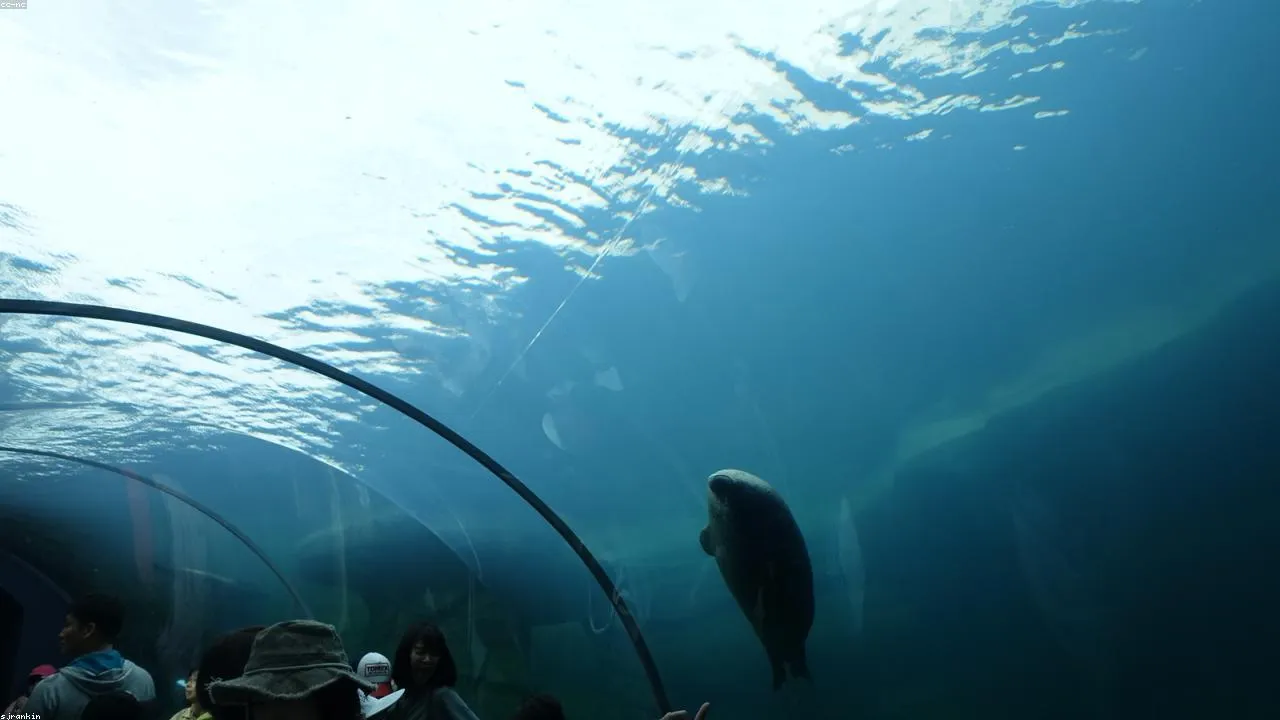
I’ve walked this tunnel probably a hundred times. It’s a 5-minute drive from my apartment in Moji-ku, and one of those quietly magical things that exists nowhere else in Japan. Most tourists who come to Mojiko Retro never make it the extra kilometer west to Mekari Park — which means the tunnel is perpetually uncrowded, perpetually free, and perpetually one of the most surreal fifteen minutes you can spend in Kyushu.
This guide is everything you need to know to walk it well.
What the Kanmon Pedestrian Tunnel actually is
The Kanmon Pedestrian Tunnel is a 780-meter undersea walkway connecting Moji-ku in Kitakyushu (Kyushu) to Shimonoseki in Yamaguchi Prefecture (Honshu). It opened in 1958, built alongside the vehicle tunnel that runs above it. At its deepest point you are about 58 meters below the surface of the Kanmon Strait.
The Kanmon Strait itself is only about 650 meters wide at this narrowest point, but it is historically one of the most significant waterways in Japan. In 1185, the Battle of Dan-no-Ura was fought directly above where you now walk — the final naval clash between the Heike and Genji clans that ended the Genpei War. The Heike were annihilated; the boy emperor Antoku drowned in his grandmother’s arms rather than be captured. Every time I walk through here I think about the fact that the seafloor a few meters above my head is one of the most historically charged bodies of water in the country.
The Kanmon Strait separates Kyushu from Honshu — Japan’s largest island. Crossing it means moving between two of Japan’s four main islands. Japan has no other public pedestrian undersea tunnel. That fact alone makes this worth doing.
Why it’s iconic
The draw is simple: you walk from one island of Japan to another, underwater, in 15 minutes, for free.
At the precise midpoint of the tunnel, there is a line inlaid in the floor marking the prefecture boundary between Fukuoka (Kyushu side) and Yamaguchi (Honshu side). You can stand with one foot in each prefecture — or squat down and get both feet on the line for the obligatory photo. It’s a genuinely funny and peculiar moment: you are simultaneously in two prefectures, inside a tube under the sea, in a tunnel that most people in Japan have never heard of.
Practical costs:
- Pedestrians: Free
- Bicycles: ¥20 cash toll (push your bike; riding inside is not permitted)
- Motorcycles: Use the separate vehicle tunnel above
How to get there from Kokura
By train and bus (recommended):
- JR Mojiko Line from Kokura Station to Mojiko Station — 13 minutes, ¥280
- From Mojiko Station, catch the bus toward Mekari — approximately ¥240, 10 minutes
- Alight at the Mekari stop; the Kyushu-side elevator building is a 3-minute walk from the bus stop
On foot from Mojiko Station: A pleasant 25-minute walk west along the strait. The path passes the Mojiko Retro waterfront district, then continues through a quieter residential stretch before arriving at Mekari Park. Many visitors stop in Mojiko Retro first, then walk westward to the tunnel — this is the route I’d recommend if weather is good.
By taxi from Mojiko Station: About ¥800, 5 minutes.
Driving: Paid parking is available at Mekari Park (small lot). On busy weekends it fills quickly.
The walk itself
Both sides of the tunnel have elevator buildings. Press the button, descend about 60 meters — the elevator is slow and slightly theatrical — and you emerge into the tunnel.
The tunnel is well-lit, clean, and wide enough for two people to pass comfortably with a bicycle. Signs are in Japanese, English, and Korean throughout. The floor is flat. The white-tiled walls have been painted at intervals with Kanmon Strait imagery — fish, ships, the strait in miniature. The air is slightly cool year-round (roughly 16°C), which makes it pleasant in summer and mildly brisk in winter.
Walk to the midpoint. Find the prefecture line. Take the photo. Continue to Shimonoseki.
The Shimonoseki-side elevator deposits you at street level near Mimosusogawa Park, with the Kanmon Bridge visible upstream and the strait opening up around you.
Total time including both elevator rides: 25–30 minutes.
What’s on each side
Kyushu side — Moji-ku:
- Mekari Park — The grassy clifftop park above the tunnel entrance is one of the best places in Moji-ku to watch ships pass through the strait. The current here runs fast enough to see visibly. Benches face west toward the bridge; sunset from here is excellent.
- Mekari Shrine (和布刈神社) — One of the oldest shrines in northern Kyushu, sitting right at the water’s edge immediately east of the tunnel entrance. During the annual Mekari Festival (around February 11), priests wade into the sea at dawn to harvest wakame seaweed — an extremely ancient rite. Worth a quiet 10-minute stop.
- Kanmon Strait Museum — A short walk east toward Mojiko proper; covers the maritime history of the strait with interactive exhibits. See our full guide.
- Mojiko Retro District — The Meiji-era red-brick waterfront district, 25 minutes’ walk east. See our full Mojiko guide.
Honshu side — Shimonoseki:
- Akama Shrine (赤間神宮) — 15 minutes’ walk east along the water from the tunnel exit. This shrine was built to honor Emperor Antoku, the child emperor who died at Dan-no-Ura in 1185. The dragon gates and the water setting make it one of the most atmospheric shrines in western Japan.
- Karato Market (唐戸市場) — 20 minutes east on foot, or a short taxi ride. The city’s main fish market with weekend pop-up sushi stalls where fresh fugu (pufferfish) sashimi starts at a few hundred yen. This is the best eating in Shimonoseki.
- Kanmon Bridge viewpoint — The iconic bridge connecting Honshu and Kyushu is visible from the Shimonoseki waterfront. Walk north along the coast from the tunnel exit for the best angle.
Best half-day plan from Kokura
This is the route I’d give any friend with four to six hours and an appetite:
- Kokura Station → Mojiko Station by JR (13 min)
- Mojiko Retro — waterfront walk, coffee at one of the brick warehouse cafes, 60–90 minutes
- Bus or walk west to Mekari — 10 min by bus, 25 min on foot
- Mekari Shrine — 15-minute stop
- Kanmon Pedestrian Tunnel — 30 minutes return or continue to Shimonoseki
- Shimonoseki side — Akama Shrine + Karato Market lunch (sushi, fugu), 90 minutes
- Return — either walk back through the tunnel (free), or take the Kanmon Ferry from Shimonoseki Port to Mojiko (¥400, 5 minutes, runs approximately every 20 minutes). I prefer the ferry for the return — the views across the strait from the boat are spectacular and you arrive directly back at Mojiko.
Total: 4–6 hours depending on how long you linger at Karato Market.
Photo tips
The prefecture-line shot: Squat down so the floor line is in sharp focus across the frame. Put both feet on the line. The tunnel stretches symmetrically behind you in both directions — this makes for a clean, uncrowded shot if you arrive early morning (6:00–8:00) or on a weekday. Flash or phone torch illuminates the line nicely without overexposing the tunnel walls.
The Shimonoseki exit looking back: Stand just outside the Shimonoseki elevator building and look across the strait toward Mojiko. On a clear day, the red-brick Mojiko warehouse district is visible. This is one of the best frames in the entire Moji-ku area — a wide-angle shot with the strait in the foreground, the warehouses in the middle ground, and Mount Sarakura in the distance. I’ve seen this become people’s trip photo.
Mekari Park benches at sunset: Arrive at the Kyushu side around 30 minutes before sunset. The benches on the cliff above the tunnel entrance face west toward the Kanmon Bridge. When the light drops, the bridge cables go golden and ships create wakes that catch the color.
Practical information
| Detail | Information |
|---|---|
| Hours | 6:00–22:00 daily (year-round, no closures) |
| Last elevator entry | 21:40 |
| Pedestrian fee | Free |
| Bicycle toll | ¥20 cash (push your bike) |
| Length | 780m |
| Walking time | ~15 min one way |
| Temperature inside | ~16°C year-round |
| Toilet | Available at Mekari Park and at the Shimonoseki exit |
| WiFi | Spotty; bring a Japan eSIM |
A note on the night walk: the tunnel stays open until 22:00 and is fully lit. Walking it after dark is a different experience — quieter, slightly more atmospheric, and the park above is empty. I’ve walked it at 21:30 on a weeknight and had the tunnel entirely to myself. The last elevator at 21:40 is firm.
One more practical point: there are no exits partway through the tunnel. Once you descend, you commit to the full 780m. This is fine for the vast majority of people — it’s flat, well-ventilated, and short. If you have mobility issues, the flat floor and elevator make this one of the more accessible undersea experiences imaginable.
Why Korean travelers love this walk
The Busan-to-Kitakyushu route is one of the most photogenic ferry arrivals in East Asia. You dock at Shimonoseki after the overnight Kampu Ferry from Busan, step into Japan, and within minutes you can walk to Kyushu through an undersea tunnel. This reversal — arriving in Japan on Honshu, then walking under the sea to begin the Kyushu leg of your trip at Mojiko — is a genuinely memorable start.
The sequence: Busan Shimonoseki Ferry → Karato Market breakfast → Kanmon Tunnel walk → Mojiko Retro arrival is very well traveled among Korean visitors and for good reason. It also puts you in Mojiko for the morning crowds at the retro waterfront, which is the right time of day.
See our Busan-to-Kitakyushu ferry guide for full logistics.
Combining with tours
Most Mojiko-focused Klook tours include the tunnel walk as part of their itinerary. If you’d prefer a guided experience with context about the Kanmon Strait’s history and the Dan-no-Ura battle, a guided tour adds real depth to what might otherwise feel like a curiosity stop.
Browse all Kitakyushu tours for current options. The Mojiko-Karato day tour departs from Fukuoka and includes the Kanmon area as a full day. The Fukuoka-Shimonoseki-Kokura day tour covers both sides of the strait with a guide.
Book the Moji Port + Karato Market day tour on Klook (ID 134536) Book the Mojiko + Karato + Motonosumi extended tour on Klook (ID 129071)The Kanmon Strait Museum nearby offers Klook ticketing if you want to combine the tunnel walk with the maritime exhibits next door.
Book Kanmon Strait Museum tickets on Klook (ID 81214)The Kanmon Pedestrian Tunnel is free, takes 15 minutes, and crosses a straits where samurai fleets once collided. It’s one of those rare things in travel that costs nothing and gives you a story worth telling. I’d walk it again tomorrow.
If you’re building a full day around it, start at Mojiko Retro, walk west to Mekari, and end with fugu at Karato Market. That’s a good day.
Browse all Kitakyushu tours and experiences if you want a guide to bring the history to life.
FAQ
Is the Kanmon Pedestrian Tunnel free?
Yes — completely free for pedestrians. Bicycles pay a ¥20 toll (you must push, not ride). Motorcycles use the vehicle tunnel above.
What are the Kanmon Tunnel opening hours?
The tunnel is open 6:00–22:00 every day of the year. Last elevator entry is 21:40. If you arrive after 22:00 you cannot enter.
How long does the Kanmon Tunnel walk take?
The tunnel is 780m long. Walking at a comfortable pace takes about 15 minutes. Add 5 minutes each way for the elevator, so budget 25–30 minutes total for the crossing.
How do I get to the Kanmon Tunnel from Kokura?
Take the JR Mojiko Line from Kokura Station to Mojiko Station (13 min, ¥280). From Mojiko Station, catch a bus toward Mekari (¥240, about 10 min) or walk 25 minutes west along the strait. The Kyushu-side elevator is in Mekari Park, a short walk from the Mekari bus stop.
Can I walk to Shimonoseki through the Kanmon Tunnel and return by ferry?
Yes — this is one of the best loop options. Walk through the tunnel to Shimonoseki, explore Karato Market and Akama Shrine, then catch the Kanmon Ferry (about ¥400, runs frequently) from Shimonoseki Port back to Mojiko. The ferry takes under 5 minutes and gives you a great view of the strait.