Dazaifu Tenmangu Day Tour from Fukuoka: Shrine + Museum Guide (2026)
How to visit Dazaifu Tenmangu shrine and Kyushu National Museum on a day tour from Fukuoka — Klook options, DIY via Nishitetsu, umegae-mochi, and photo tips.

Dazaifu Tenmangu is the kind of place that rewards spending real time there — not 45 minutes as a coach-tour photo stop. The main hall, the ume plum grove, the forested path to Kyushu National Museum behind it: there’s enough here for a relaxed half-day, or a full day if you add the museum properly and linger over grilled umegae-mochi on the approach.
This guide covers the standalone Dazaifu day tour from Fukuoka — the tour that makes Dazaifu the main event, not a quick stop on a bigger itinerary. If you’re looking for the multi-stop version that pairs Dazaifu with Karato Market and Kokura Castle, see the Fukuoka Foodie Culture Tour instead.
Why Dazaifu Tenmangu matters
Dazaifu Tenmangu was built in 919 CE over the grave of Sugawara no Michizane (845–903), a brilliant scholar and court official who was exiled from Kyoto by political rivals and died in Dazaifu in disgrace. After his death, a series of disasters — lightning strikes, floods, plague — convinced the imperial court that his spirit was wreaking revenge. He was posthumously reinstated, deified as Tenjin, the god of learning, scholarship, and calligraphy, and Dazaifu Tenmangu became the head shrine of the roughly 12,000 Tenmangu shrines across Japan.
Today, students visit before entrance exams to pray for academic success. The shrine sells more ema (wooden wishing plaques) than almost any shrine in Japan. During exam season (January–March), the approach is thick with students in school uniforms hanging ema and buying omamori charms.
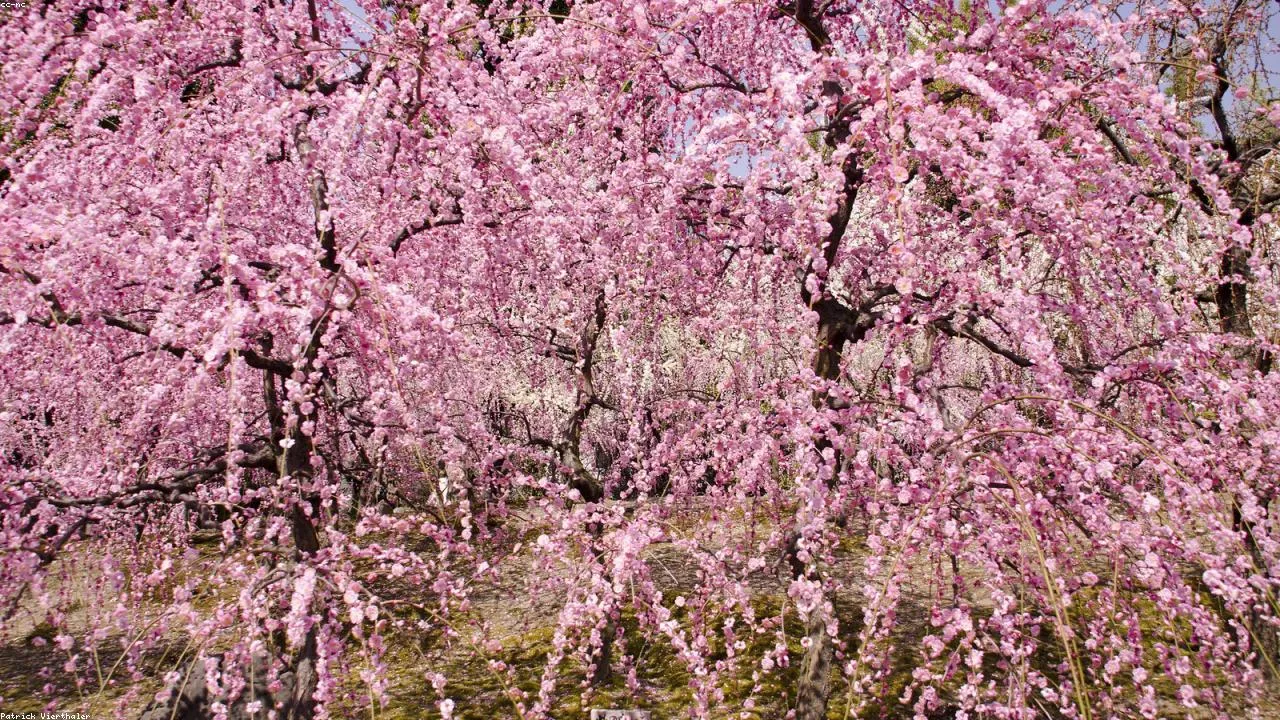
Michizane was also famous for his love of plum blossoms. According to the legend of the Tobiume (“flying plum”), when he was exiled to Dazaifu, his beloved plum tree in Kyoto uprooted itself overnight and flew to be with him. That tree still stands in the shrine grounds — a gnarled, ancient plum that blooms every February. Around 6,000 plum trees of 200 varieties bloom across the Dazaifu area in late January through March, making this one of the finest ume-viewing spots in Japan.
The shrine itself
The approach street (sandō) from Dazaifu Station is about 800 meters of stone-paved lane flanked by shops selling umegae-mochi, Hakata dolls, plum-flavored everything, and the inevitable souvenir keyrings. It’s touristy but not aggressively so — the shops are genuine local businesses, most of them decades old.
Crossing the taiko drum bridges (the three arched stone bridges over the ornamental pond) is the traditional entry to the inner precincts. The main hall (honden) is wrapped in Chinese-influenced architectural detail and is more elaborate up close than photographs suggest.
The Tobiume tree is in the courtyard to the left of the main hall — look for the signage, and look for the gnarled trunk wrapped with rope. In February it’s surrounded by photographers.
Goshuin: Dazaifu offers one of the most sought-after goshuin (shrine stamps) in Kyushu. The stamp office is to the right of the main hall. There’s usually a queue in peak season; budget 20–30 minutes.
Treasure House: The Kankokan museum on the shrine grounds holds scrolls, swords, and items relating to Michizane’s life. Admission is around ¥500. Small but worthwhile if you have the time.
Kyushu National Museum — the pairing that makes this a full day

A five-minute walk up a forest path behind the shrine — through a covered moving-walkway tunnel if you prefer — leads to Kyushu National Museum (Kyūhaku), which opened in 2005 and is the fourth of Japan’s four national museums (alongside Tokyo, Kyoto, and Nara).
Kyūhaku’s permanent collection focuses on the cultural exchange between Japan and Asia — ceramics, bronzes, lacquerware, and textiles tracing trade routes through Hakata port across 2,000 years. The rotating temporary exhibitions are major events: think loan shows from mainland China, Korea, and Southeast Asia. Check the museum website before your visit; if a significant temporary exhibition is running, add an extra hour.
General admission is ¥700 for adults. The building itself — a sweeping titanium and glass arc designed by Kikutake Kiyonori — is worth seeing from the forest path before you enter.
Allow 90 minutes minimum for the permanent collection. Two hours if you’re serious about it. The museum café has a terrace overlooking the forest — a good place to decompress before the walk back down.
Tour route and timing
A typical guided half-day tour from Hakata runs:
Hakata Station pickup (09:00) → 30-minute drive or transit to Dazaifu → shrine approach and main hall (60–75 minutes) → Kyushu National Museum (90 minutes) → return to Hakata (12:30–13:00).
That leaves the afternoon free. Common pairings:
- Add a Kanmon Strait excursion in the afternoon — drive north to Mojiko and Karato for lunch, back to Fukuoka in the evening. See /fukuoka/hakata/ for transit connections.
- Add Nakasu evening — Dazaifu finishes in time for a long lunch break, then Nakasu yatai (food stalls along the canal) for dinner.
- Extend with Dazaifu city — the wider Dazaifu area has Kanzeonji Temple and its atmospheric bell-casting ruin, and the Dazaifu Government Office ruins (Dazaifu Tenmangu was the ancient administrative capital of Kyushu before Fukuoka).
Klook tour options
Dazaifu often appears as a half-day tour that can be combined with another activity. Search Klook for current Dazaifu-focused options:
Search Dazaifu day tours on Klook →What to look for in a listing:
- Shrine + Museum combo — some tours skip the museum entirely and just cover the shrine approach. If Kyūhaku is a priority, confirm it’s included.
- Small-group vs. large coach — the approach street is narrow; large-group tours can feel rushed. Small-group tours (12 or fewer) give more time and better photo opportunities at the drum bridges.
- Half-day vs. combo — half-day Dazaifu-only tours depart around 09:00–09:30 and return to Hakata by 13:00–14:00. Combo tours with Yanagawa or Itoshima fill the afternoon.
Free cancellation: Most Klook tours offer free cancellation up to 24–48 hours before departure. Confirm the specific policy on the listing page before booking.
For comparison: the Fukuoka Foodie Culture Tour includes a Dazaifu stop but typically allocates 45–60 minutes at the shrine — not enough for the museum, and not enough for a proper ume-viewing walk in February.
DIY via Nishitetsu — the easy alternative
Dazaifu is one of the most accessible day trips from Fukuoka and one where DIY genuinely makes sense unless you want a guide’s commentary.
From Tenjin Station (Fukuoka):
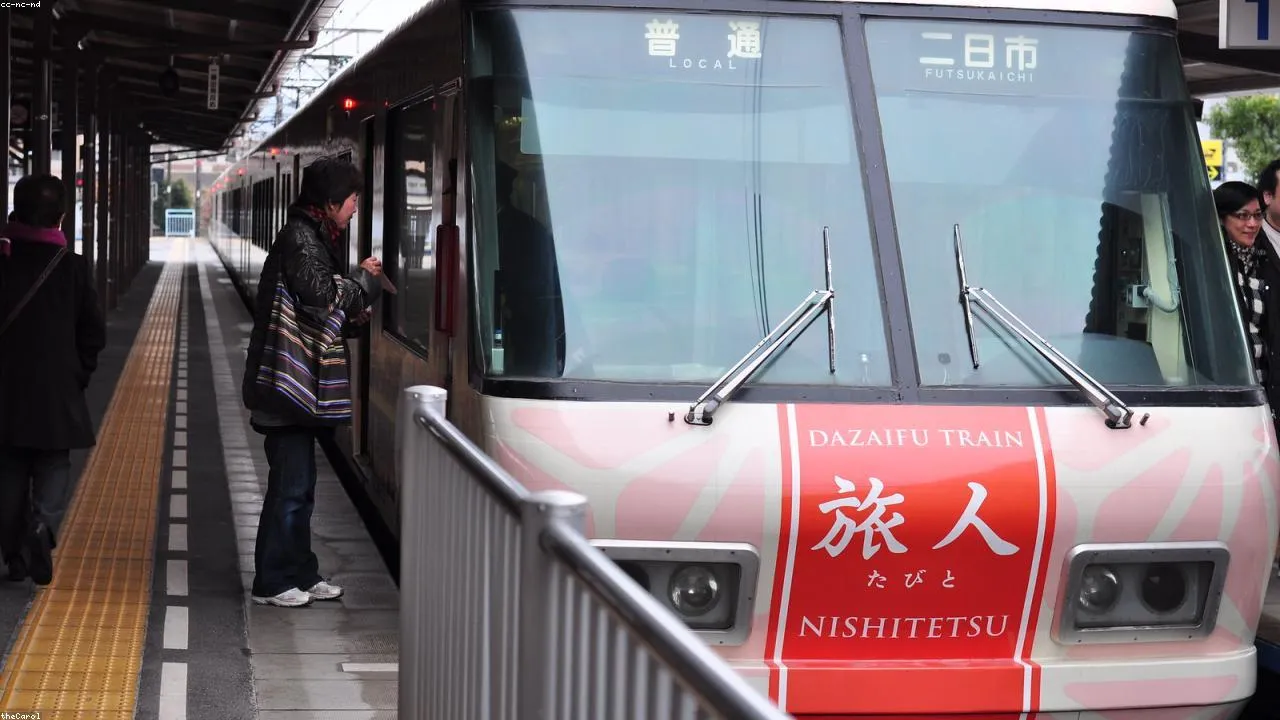
- Nishitetsu Tenjin Omuta Line → Futsukaichi Station (approx. 25 minutes, ¥370)
- Transfer to Nishitetsu Dazaifu Line → Dazaifu Station (5 minutes, ¥50)
- Total: ~40 minutes, ¥420 one way
Trains run every 10–15 minutes in daytime. The station exits directly onto the approach street — you cannot miss it.
From Hakata Station: Buses run direct to Dazaifu (Nishitetsu Bus, route 500-series) from Hakata Bus Terminal on the 2nd floor of the Hakata Station building. Journey time is around 40–45 minutes. Less convenient than the train but useful if you’re already at Hakata.
Practical notes:
- IC cards (Suica, ICOCA, Nimoca, etc.) all work on Nishitetsu.
- The shrine opens at sunrise; the inner offices and Kankokan museum open at 09:00.
- Kyushu National Museum opens at 09:30 (closed Mondays; if Monday is a national holiday, closed Tuesday instead).
- The approach shops generally open by 08:30 and the fresh umegae-mochi stalls start selling by 09:00.
Before you go, make sure your phone has mobile data — the Nishitetsu app and Google Maps are useful for platform numbers at Futsukaichi. If you haven’t sorted a Japan data plan yet, see our Japan eSIM guide.
Omiyage: umegae-mochi
Umegae-mochi (梅ヶ枝餅) is the Dazaifu omiyage. A thick grilled rice cake, filled with sweetened red bean paste, pressed with a plum blossom stamp, and sold hot off a cast-iron griddle. It’s associated with a story: a woman named Ume-no-mae used to bring these rice cakes to the exiled Michizane when he was in poverty at Dazaifu.
Where to buy: Every shop on the approach sells them. The most Instagrammed spots are the open-front stalls near the drum bridges where you can watch the cakes being grilled on the rows of iron molds. Kasanoya (nearest the station) and Yamatoya (midway up the approach) are the two oldest shops. Buy and eat immediately — they’re best hot.
Matcha umegae-mochi: Several newer shops have introduced a matcha-flavored version alongside the original red bean. Worth trying if you’re visiting in February during ume season.
Package versions: Pre-packaged umegae-mochi are available for bringing home. They keep for 2–3 days. Good for gifts if you’re heading somewhere immediately after Dazaifu.
Photo tips
The drum bridges at golden hour (morning): The three arched stone bridges at the entrance to the inner precinct photograph best in early morning light before the tour groups arrive. If you’re going DIY, take the first train and arrive by 09:15. On a clear February morning with ume blossoms on the trees above the bridges, this is one of the best shots in Fukuoka Prefecture.
Tobiume up close: The flying plum tree photographs best in mid-February when the blossoms are at full peak. Get there early — by 10:00 on a weekend in ume season, there will be a circle of photographers around it.
Kyūhaku from the forest path: The museum building’s glass-and-titanium facade reflects the surrounding cedar forest in an interesting way. The elevated walkway approach gives the best wide-angle shot of the building.
Approach street food shots: The umegae-mochi stalls are good at any time, but the steam and grill marks look best in morning light or on a cold day.
Who this tour suits
Students and families with students — the academic connection is the whole point for many Japanese visitors (and Korean visitors — more on this below). If anyone in your group is preparing for exams, buying an ema or an omamori here has genuine cultural meaning.
Lovers of Japanese history and architecture — the 1,000-year shrine compound, the flying plum legend, and Kyushu’s role as Japan’s ancient gateway to Asia make Dazaifu intellectually rich in a way that pure nature spots aren’t.
February travelers — ume blossom season (late January to mid-March, peaking in mid-February) makes this one of the top seasonal sights in Kyushu. Sakura is more famous, but ume has better fragrance and less crowd competition.
Visitors pairing with Fukuoka/Hakata — Dazaifu is 30 minutes from the city center. It makes sense as a morning excursion before an afternoon in Tenjin or a Nakasu dinner.
Note: If you’re looking at /tours/ for options that cover more of north Kyushu in a single day, the Fukuoka Foodie Culture Tour packages Dazaifu alongside other stops — it’s efficient if you haven’t seen any of the region yet, but gives less time at each location.
FAQ
How long does a Dazaifu day tour from Fukuoka take? A half-day tour covering Dazaifu Tenmangu and Kyushu National Museum runs 5–6 hours from Hakata Station. Combining with an evening activity in Nakasu or a Kanmon excursion makes a full day of 10–12 hours.
Can I visit Dazaifu independently from Fukuoka? Yes — take the Nishitetsu Tenjin Omuta Line from Tenjin Station to Futsukaichi, change to the Dazaifu Line, and arrive in about 40 minutes total (¥420). No guide needed; the approach street is well-signed.
When is the best time to visit Dazaifu Tenmangu? February for ume plum blossoms (late January to mid-March, peak mid-February). Autumn (October–November) for red maples. Avoid Golden Week and New Year unless you want crowds.
What is umegae-mochi? A grilled rice cake filled with red bean paste, stamped with a plum blossom, and sold hot on the approach street. Buy it from an open-front stall near the drum bridges and eat it immediately.
How is this different from the Foodie Culture Tour? The Foodie Culture Tour includes Dazaifu as one stop among several. This standalone tour focuses entirely on Dazaifu — shrine, museum, approach street — giving you 3–4 hours at the site versus 45–60 minutes on the combo tour.
Dazaifu Tenmangu is worth the trip from Fukuoka on its own merits — the shrine, the plum trees, the national museum, and one of the best local sweets in Kyushu. Whether you book a guided tour or take the Nishitetsu train yourself, build in at least three hours on site.
Browse Dazaifu day tours on Klook →Booking through this link helps fund KitaQ.Travel’s photography and original research at no extra cost to you.
Browse more day-tour options from Fukuoka and Kitakyushu on the tours hub.
FAQ
How long does a Dazaifu day tour from Fukuoka take?
A half-day tour covering Dazaifu Tenmangu and Kyushu National Museum runs 5–6 hours from Hakata Station. Combining it with an evening activity in Nakasu or a Kanmon Strait excursion makes a full day of 10–12 hours.
Can I visit Dazaifu independently from Fukuoka?
Yes — it's one of the easiest day trips from Fukuoka. Take the Nishitetsu Tenjin Omuta Line from Tenjin Station, change at Futsukaichi for the Dazaifu Line, and arrive at Dazaifu Station in about 40 minutes total. The fare is ¥420 one way. No guide needed, and the shrine approach street is well-signed in English.
When is the best time to visit Dazaifu Tenmangu?
February for the ume plum blossoms — the shrine enshrines the god of learning Sugawara no Michizane, who loved plums, and roughly 6,000 plum trees bloom across the grounds. Autumn (October–November) for red maple foliage. Avoid Golden Week and the New Year hatsumode rush unless you enjoy dense crowds.
What is umegae-mochi and where do I buy it?
Umegae-mochi is a grilled rice cake filled with red bean paste, stamped with a plum blossom motif, and sold exclusively by shops on Dazaifu's approach street. It's the obligatory omiyage from this trip. Buy it fresh-grilled from one of the stalls — Kasanoya at the entrance to the approach is the most photographed spot.
Is the Dazaifu Tenmangu tour different from the Fukuoka Foodie Culture Tour?
Yes. This tour focuses entirely on Dazaifu — the shrine, Kyushu National Museum, and the approach street. The Fukuoka Foodie Culture Tour includes Dazaifu as one of three or four stops alongside Karato Market and Kokura Castle. If Dazaifu is your main interest, a standalone Dazaifu tour gives you significantly more time at the shrine and museum.