Akiyoshido Cave + Motonosumi Shrine Day Tour from Fukuoka: 2026 Honest Review
Honest review of the Yamaguchi day tour from Hakata — Akiyoshido cave + Motonosumi Shrine + optional Tsunoshima. Three tour variants compared, DIY alternative included.


Three of western Japan’s most photogenic places are all in Yamaguchi Prefecture — and none of them are easy to reach without a car. That combination makes this Klook day tour one of the better-value bundles I’ve seen departing Fukuoka. If you have a single free day and want to see Japan’s largest limestone cave, a clifftop shrine that looks designed by a film crew, and a Caribbean-blue bridge that defies expectations for a rainy island nation — this tour does all three.
I live in Moji-ku and have driven the loop myself twice. Here’s an honest take on what the tour covers, how the three Klook variants compare, and when DIY is actually the better call.
Why these three sites belong on the same tour
Akiyoshido Cave is Japan’s largest limestone cave — roughly 10 kilometers long with a 1-kilometer public path through the main chamber. The cave sits inside the Akiyoshidai karst plateau, a rolling grassland that looks more like Scotland than Japan. Year-round temperature inside is approximately 17°C, which makes it a legitimately pleasant stop in July heat and demands a jacket in December.
Motonosumi Inari Shrine is the clifftop torii line that has gone quietly viral every spring for the past decade. One hundred and twenty-three red torii gates run from the cliff edge down toward the Sea of Japan — not the dense, tunnel-like arrangement of Fushimi Inari, but an airy, open path where each gate frames a slice of the ocean below. The shrine was established in 1955 after a local fisherman claimed a white fox told him to build it. The dedication box is mounted at the top of the outermost torii — a deliberate challenge that the internet has made into a game.
Tsunoshima is an island connected to Honshu by a 1,780-meter white causeway. On clear days the water around it goes a blue that looks edited, like Okinawa somehow ended up in western Honshu. It hasn’t — the sand and shallow depth genuinely do that. The best photograph of the bridge is from the Amagase Park viewpoint on the mainland side before you cross, looking out at the full causeway span.
All three sites are within Yamaguchi Prefecture, all two to three hours from Fukuoka by car, and none are realistically combinable in one day without either driving yourself or booking a tour. That’s why the tour exists. That’s why it sells.
Tour route at a glance
A typical day runs as follows:
- 08:00 — Pickup at Hakata Station (east exit, bus area)
- ~10:00 — Arrive Akiyoshidai / Akiyoshido Cave entrance
- 10:00–11:00 — Cave walk (1 km public path, flat, no guide required)
- 11:30 — Lunch break (usually near the cave — restaurant included or nearby)
- ~13:00 — Arrive Motonosumi Inari Shrine
- 13:00–13:45 — Torii walk + shrine exploration
- ~15:00 — Arrive Tsunoshima (3-stop variants only)
- 15:00–15:30 — Tsunoshima Bridge stop, Amagase viewpoint
- ~19:00–20:30 — Return to Hakata Station
The travel between stops is the honest cost: about 1.5 hours between Akiyoshido and Motonosumi, another hour if you add Tsunoshima. You’re in a minibus for a substantial part of the day. That’s the tradeoff the tour is making — it’s eliminating the navigational problem, not the geography.
Three Klook variants compared
Standard: Akiyoshido + Motonosumi (2 stops)
The baseline bundle covers the two most-photographed stops with a manageable day length. Good for travelers who want to be back in Fukuoka for dinner, or anyone for whom a 19:00 return is more practical than a 20:30 one.
Book the Akiyoshido + Motonosumi standard tour on Klook (~¥13,000/person)Extended: Akiyoshido + Motonosumi + Tsunoshima (3 stops)
Add Tsunoshima for roughly ¥2,000 more per person and an extra 1.5 hours. Worth it on a clear day, genuinely disappointing when overcast — the bridge looks gray rather than Caribbean under cloud cover. If your travel date has a strong weather forecast, upgrade to this variant.
Book the 3-stop Tsunoshima variant on Klook (~¥15,000/person)Sunday-only variant
Runs on dates when the main weekday tour is not operating. Identical route to the standard 2-stop but restricted availability. If your dates align and the weekday options are sold out, this is the same experience.
Book the Sunday Akiyoshido + Motonosumi variant on KlookMulti-stop alternative: Mekari + Akiyoshido + Tsunoshima
A different bundle that starts in Kitakyushu at the Mekari Observation Deck before continuing to Akiyoshido and Tsunoshima. Useful if you’re specifically interested in adding a Kanmon Strait viewpoint to the day. Note that this variant skips Motonosumi.
View the Mekari + Akiyoshido + Tsunoshima tour on Klook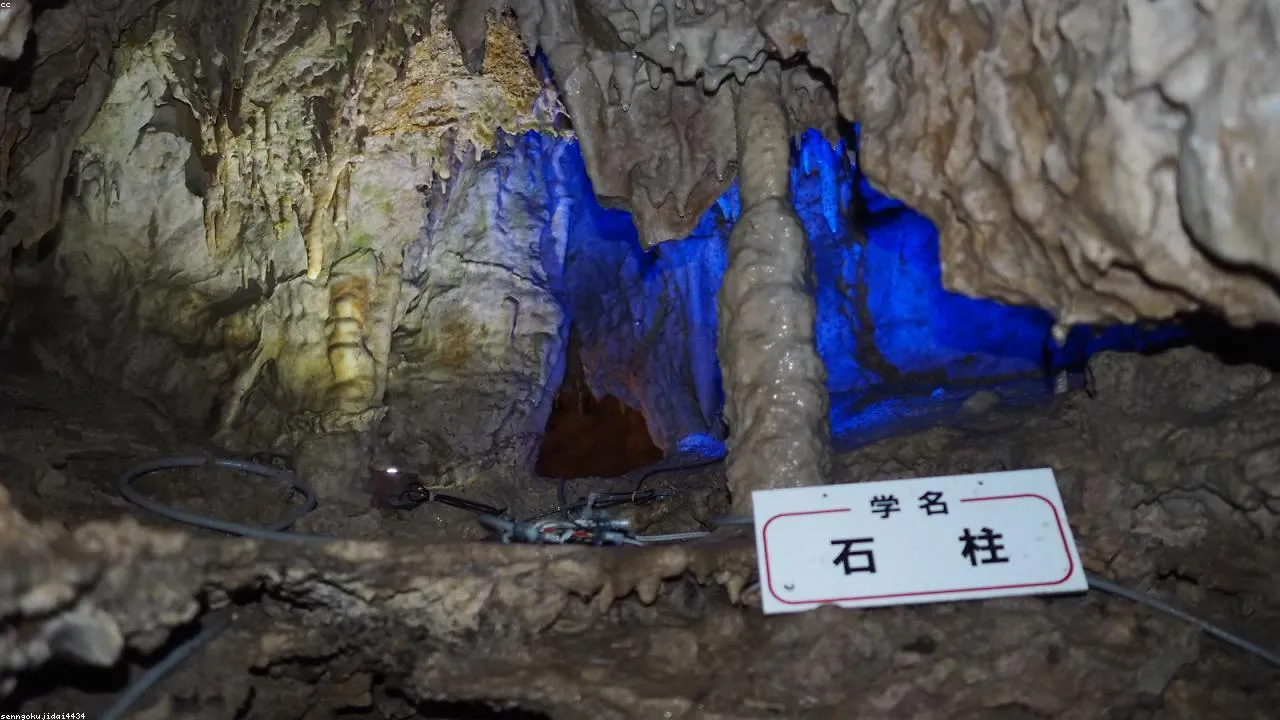
Who this tour is for
Anyone without a rental car who wants to see Motonosumi. The shrine sits near Nagato city in Nagato district, a corner of Yamaguchi where public transport is sparse. The combined JR and local bus journey from Hakata takes roughly four to five hours each way on a good connection. The tour eliminates that friction and bundles in two additional stops for a price that undercuts the train + bus cost by the time you factor in two adults.
Photographers will find two genuinely different lighting opportunities. Mid-morning at Akiyoshido gives you the cave entrance shot — the lip of rock framing the dark interior. Late afternoon at Motonosumi delivers the golden-hour light that makes the torii-and-ocean combination look the way it does in every photo you’ve seen online. The tour timing is not accidental; it schedules Motonosumi for the afternoon specifically because of this.
First-time Yamaguchi visitors who want to cover the prefecture’s highlights in a single day rather than building a separate Yamaguchi trip. It’s a legitimate sampler.
Who should skip
Drivers with a rental car. You can self-route this loop for considerably less and spend as long as you want at each stop. The cave alone merits more than 45 minutes if you’re interested in the geology; Motonosumi deserves a slow walk down and back, not a timed group departure.
Travelers based in Kitakyushu. The tour departs from Hakata Station in Fukuoka, not from Kokura or Kitakyushu. If you’re based at Kokura Castle area and this is your only available day, you’ll need to factor in the 16-minute Shinkansen trip to Hakata (¥1,470) on top of the tour cost. It’s doable, but it adds friction.
Anyone who dislikes group travel. The tour is minibus-format with assigned stops and departure times. If your travel style is wandering and lingering, a rental car from Fukuoka serves you better.
DIY alternative (for the rare reader with a rental car)
The self-drive route from Fukuoka: take the Chugoku Expressway west from Fukuoka toward Yamaguchi, approximately 2.5 hours to Akiyoshidai/Akiyoshido. Tolls are around ¥4,000 each way. From Akiyoshido to Motonosumi is another 1.5 hours north via Route 490 through the Nagato interior. Back to Fukuoka from Motonosumi is about 2.5 hours.
Realistic DIY costs for two people:
- Rental car: ¥8,000–12,000/day
- Expressway tolls (round trip): ¥8,000
- Fuel: ¥4,000+
- Total: ¥20,000–24,000 for two (~$130–160 USD)
The standard Klook tour for two: ¥26,000 ($170 USD), but with zero driving fatigue on an unfamiliar route and no navigation stress in rural Yamaguchi.
The math: tour wins for solo travelers and pairs; DIY wins for groups of three or more (and anyone who wants to spend three hours at Motonosumi watching the light change rather than 45 minutes). For a group of four sharing a rental car, DIY is easily ¥10,000 cheaper and far more flexible.
What’s at each stop
Akiyoshido Cave (Akiyoshidai district): The 1-kilometer public path through the main chamber takes 45–60 minutes at a normal pace. Highlights include the Hyakumai-zara terraced limestone pools (which look like a hundred white plates stacked at angles), the underground Kuroiwa River running alongside the path, and the cave exit through a vertical shaft near the plateau surface. Bring a light layer — 17°C is pleasant but noticeably cool. The cave is fully lit and paved; it’s accessible to most visitors.
Motonosumi Inari Shrine: One hundred and twenty-three torii gates descend from the road level down to a small shrine building at the cliff edge facing the Sea of Japan. The walk down takes about 10 minutes; add time for photos and the walk back. The donation box mounted at the top of the final gate is the most-photographed challenge in the area — tossing a coin into it from below is harder than it looks. The surrounding cliff and sea views are available from a short path beyond the shrine building.
Tsunoshima: The 1,780-meter bridge connects Tsunoshima island to the Honshu mainland. The best photograph is from Amagase Park viewpoint on the mainland, looking out over the causeway toward the island — the white road, the green island, the (ideally) blue water. Swimming is possible in summer at the island’s beaches, though tour groups don’t have time for it.
Best season
Akiyoshido is genuinely year-round. The cave climate is controlled by nature and the path is weather-independent. Any month works.
Motonosumi peaks visually in two windows: late spring (late April through early June, when the surrounding grass is vivid green against blue ocean and red torii) and early November (when the autumn light is low and warm). The shrine is open year-round; it’s the surrounding landscape that changes.
Tsunoshima requires blue sky and calm seas. The water color is a direct function of sunlight angle and depth — on overcast days it reads as gray-blue rather than Caribbean. Avoid the June rainy season (tsuyu) for the Tsunoshima variant; a gray bridge photograph is a let-down after building up expectations. Late September and October are the best Tsunoshima months: post-typhoon clarity, lower humidity, and the tourist crowds of summer have thinned.
Photo tip from someone who’s driven this loop
I’ve done this route twice — once in late October, once in late April. For Motonosumi, the most common mistake is shooting from the cliff-level path looking up at the torii. That photo isn’t bad, but it’s not the one that gets shared. Climb to the road above the shrine (there’s a path, it takes two minutes) and shoot downward — you get the full line of 123 gates converging toward the ocean horizon. That top-down composition with the blue sea beyond is the shot that made this shrine famous. Afternoon light (14:00–16:00 depending on season) is ideal; the sun comes from the southwest and hits the red lacquer directly.
For Akiyoshido, the cave entrance from outside — looking into the dark opening from the bright plateau — is underrated. Get there when the tour group ahead of you has entered so you can shoot the entrance without people in frame.
Booking and cancellation
All variants are bookable on Klook with free cancellation up to 72 hours before the tour date. After that window, the full tour price applies. This policy means you can book with reasonable confidence and cancel if your weather forecast collapses — the Tsunoshima variant especially benefits from this flexibility.
Tour pickup is Hakata Station (east exit / Hakata Bus Terminal area). The meeting point is clearly marked on the Klook booking confirmation. If you’re staying in Kitakyushu, the Shinkansen to Hakata takes 16 minutes and runs frequently from Kokura Station (¥1,470 non-reserved, or included on most JR Passes). I’d recommend arriving at Hakata 20–30 minutes before the tour departure to account for any Shinkansen delays.
For data and navigation during the day in rural Yamaguchi, I use an eSIM rather than relying on WiFi — the mountainous route between Akiyoshido and Motonosumi has patchy convenience store coverage. The Japan eSIM guide covers which plans work in remote Yamaguchi.
Check current price & availability on Klook →FAQ
How long is the Akiyoshido + Motonosumi day tour from Fukuoka? The standard 2-stop tour runs about 11 hours — pickup from Hakata Station around 08:00, returning around 19:00. The 3-stop variant including Tsunoshima adds roughly 1.5 hours and returns closer to 20:30.
Is the Akiyoshido cave cold inside? Yes — the cave maintains a year-round temperature of around 17°C (63°F), which feels refreshing in summer and chilly in winter. Bring a light jacket regardless of the season outside.
Can I do Motonosumi Inari Shrine without a tour from Fukuoka? Technically yes, but it takes most of a day each way by public transport — JR Shinkansen to Shin-Yamaguchi, then limited local buses. Most travelers find the tour saves 3–4 hours of transit and considerable stress. If you have a rental car, DIY is viable and cheaper for groups of 3 or more.
What is the Klook cancellation policy for these tours? Klook’s standard free cancellation applies if you cancel more than 72 hours before the tour date. Within 72 hours, the full tour price is charged. Check the individual activity page for the most current policy.
Does the Tsunoshima tour pick up in Kitakyushu or Kokura? No. All Klook Yamaguchi day tours depart from Hakata Station in Fukuoka city. If you’re based in Kitakyushu, take the Shinkansen to Hakata (16 minutes, ¥1,470) and join the tour there.
For other Northern Kyushu day tours departing Fukuoka, see all day tours — the Yanagawa river cruise, Beppu onsen, and Nagasaki bundles all run a similar Hakata Station pickup format. If you’re building a broader Yamaguchi itinerary, the Yamaguchi Prefecture hub has city-by-city breakdowns.
FAQ
How long is the Akiyoshido + Motonosumi day tour from Fukuoka?
The standard 2-stop tour runs about 11 hours — pickup from Hakata Station around 08:00, returning around 19:00. The 3-stop variant including Tsunoshima adds roughly 1.5 hours and returns closer to 20:30.
Is the Akiyoshido cave cold inside?
Yes — the cave maintains a year-round temperature of around 17°C (63°F), which feels refreshing in summer and chilly in winter. Bring a light jacket regardless of the season outside.
Can I do Motonosumi Inari Shrine without a tour from Fukuoka?
Technically yes, but it takes most of a day each way by public transport — JR Shinkansen to Shin-Yamaguchi, then limited local buses. Most travelers find the tour saves 3–4 hours of transit and considerable stress. If you have a rental car, DIY is viable and cheaper for groups of 3 or more.
What is the Klook cancellation policy for these tours?
Klook's standard free cancellation applies if you cancel more than 72 hours before the tour date. Within 72 hours, the full tour price is charged. Check the individual activity page for the most current policy.
Does the Tsunoshima tour pick up in Kitakyushu or Kokura?
No. All Klook Yamaguchi day tours depart from Hakata Station in Fukuoka city. If you're based in Kitakyushu, take the Shinkansen to Hakata (16 minutes, ¥1,470) and join the tour there.